2026-08-14 · Lightning Fast A/C & Heating · Lithia, FL
R-22, R-410A and the R-454B Switch: What Florida AC Owners Should Know
Refrigerant rules changed again in 2026. Here is the plain-English version of what R-22, R-410A, and the new low-GWP refrigerants mean for your wallet.
R-22 (Freon): phased out and pricey
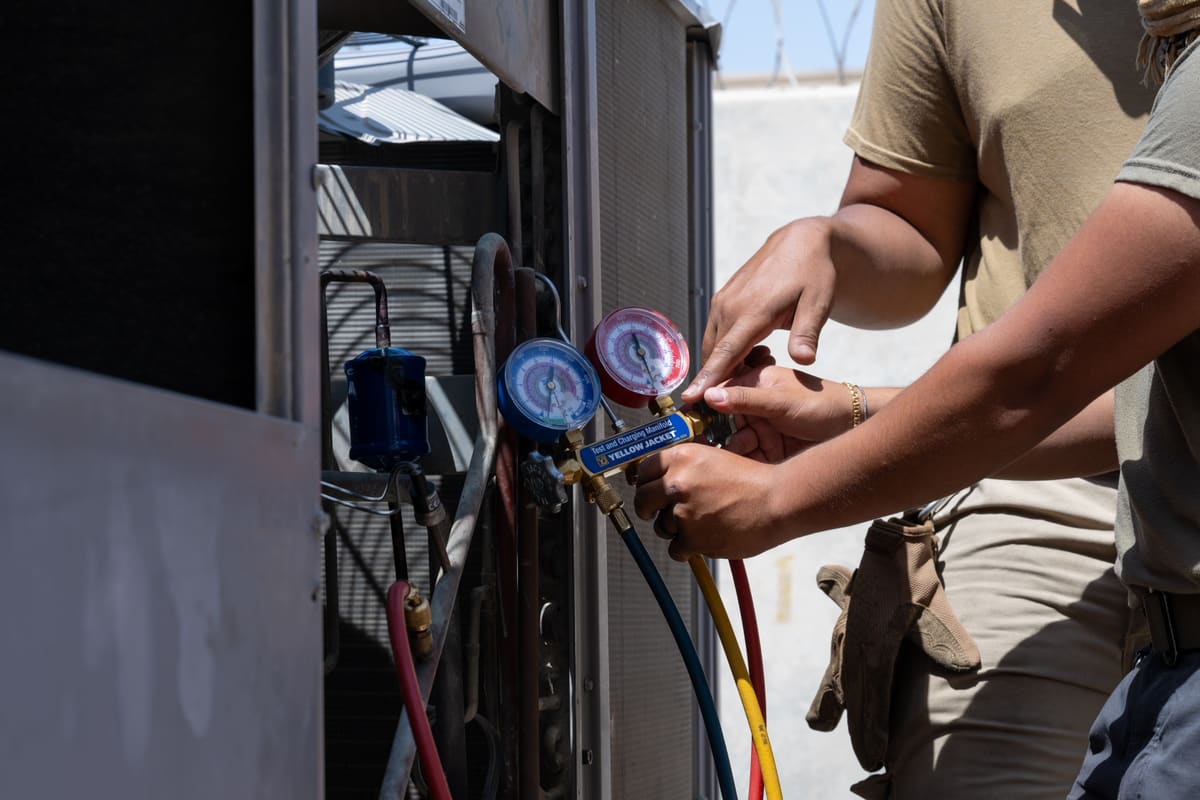
If your AC is roughly 2010 or older it may still use R-22, also called Freon. R-22 was phased out for environmental reasons and is no longer produced, so recharging a leaking R-22 system is now very expensive. For most R-22 systems, a significant refrigerant repair is the moment replacement makes more sense.
R-410A: the recent standard
Systems installed roughly between 2010 and 2024 typically use R-410A (Puron). It is still serviceable and widely available today, though it is now being phased down too. If you have a healthy R-410A system, there is no need to rush, keep it maintained and it will serve you well.
R-454B and R-32: the new low-GWP refrigerants
As of 2025, new systems use lower global-warming-potential refrigerants like R-454B and R-32. If you buy a new AC now, it will use one of these. They are efficient and future-proof, which is part of why replacing an old R-22 unit now is a sound long-term move rather than pouring money into obsolete refrigerant.
How to tell which refrigerant you have
You do not need to guess. The data plate on your outdoor condenser lists the refrigerant type, and the installation date gives a strong hint: roughly 2010 or older often means R-22, systems from about 2010 to 2024 are usually R-410A, and anything installed in 2025 or later will use a newer low-GWP refrigerant like R-454B or R-32. Any technician can confirm it in seconds during a service call. Knowing your refrigerant matters because it changes the cost of a repair dramatically, the same refrigerant leak is a routine fix on an R-410A system and a budget-buster on an R-22 one, simply because of what the refrigerant now costs. We always identify your refrigerant up front so the repair-or-replace conversation is grounded in real numbers rather than surprises.
Why you should not panic about a phase-down
Refrigerant phase-downs sound alarming, but they rarely require urgent action on a healthy system. R-410A is being phased down the same way R-22 was, gradually, which means if you have a sound R-410A system there is no reason to rush out and replace it; keep it maintained and it will serve you for years, and refrigerant will remain available to service it for a long time. The phase-down only becomes a decision point when an older system develops a significant leak and the cost of its now-pricier refrigerant tips the math toward replacement. The practical takeaway is to let the condition of your system, not headlines about refrigerant, drive the timing. When a repair does force the question, the move to a modern low-GWP unit is a sound long-term investment, not a loss.
Why you cannot just swap refrigerants
A common question is whether an old R-22 system can simply be refilled with a cheaper or newer refrigerant to avoid a big repair bill. The honest answer is that it is not that simple, and shortcuts here cause real damage. Refrigerants operate at different pressures and are matched to specific compressors, metering devices, and oils, so putting the wrong refrigerant into a system designed for another can wreck the compressor and void any warranty. There are so-called drop-in replacements for R-22, but they are compromises that typically reduce capacity and efficiency and are rarely a good long-term value. Newer low-GWP refrigerants like R-454B and R-32 are designed for new equipment built to handle them, not for retrofitting an aging R-22 unit. This is why, when an older R-22 system develops a significant leak, the sound move is almost always a modern replacement rather than an attempt to convert it. Anyone offering to cheaply switch your refrigerant to dodge a repair is usually setting you up for a bigger failure.
What recharging actually costs over time
Topping off a leaking system is tempting because the immediate bill looks smaller than a real repair, but it is usually the more expensive path, especially with R-22. Refrigerant does not get used up; if it is low, it leaked, and it will leak again, so a recharge without finding and fixing the leak is a temporary patch you will pay for repeatedly. With R-22 now scarce and expensive, each of those recharges can be surprisingly costly, and two or three of them often add up to more than the leak repair or even a down payment on a new system would have been. The environmentally and financially responsible approach is to find the leak and either repair it or, on an old system where repair does not pencil out, replace the unit. We are always upfront about which path makes sense, because quietly selling annual recharges is exactly the kind of practice our customers switched to us to avoid.
What this means for your decision
Short version: R-22 system with a leak means price a replacement; healthy R-410A system means maintain and enjoy it; buying new means you get a modern low-GWP unit that is cheaper to run. We will tell you exactly which refrigerant your system uses and lay out the honest options, financing included. Call (813) 743-2353.