2026-08-14 · Lightning Fast A/C & Heating · Lithia, FL
What Size AC Do I Need? A Florida Home Sizing Guide (by Square Footage)
The quick square-footage rule gets you in the ballpark, but in Florida the wrong size AC leaves your house humid and your bills high. Here is how sizing actually works.
The rough rule of thumb
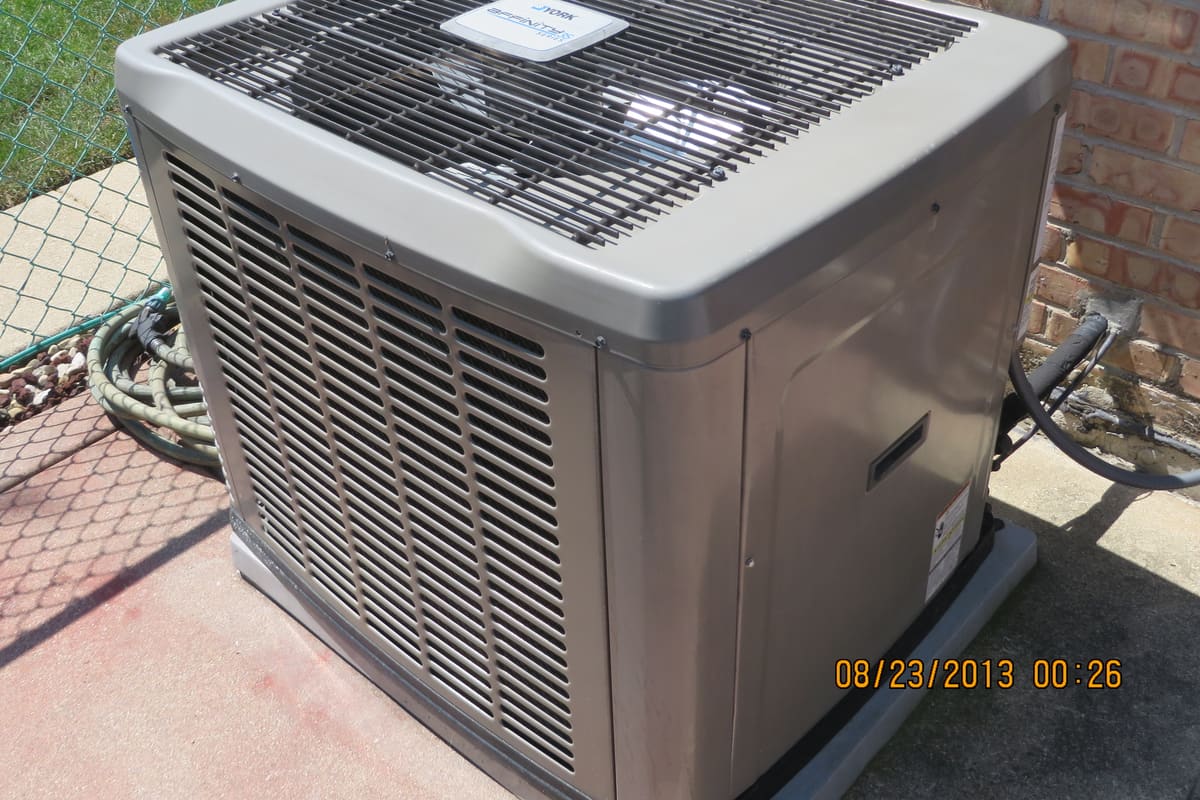
A common starting point is about 20 BTU per square foot, or roughly 1 ton of cooling per 500 to 600 square feet in Florida. So a 1,500 sq ft home usually lands around 2.5 to 3 tons, a 2,000 sq ft home around 3.5 tons, and a 2,500 sq ft home around 4 tons. Treat these as a ballpark, not a final answer, because two homes the same size can need different systems.
Quick Florida sizing estimates
As a rough guide for typical Hillsborough County homes: 1,000 sq ft is about 2 tons, 1,500 sq ft about 2.5 to 3 tons, 2,000 sq ft about 3 to 3.5 tons, 2,500 sq ft about 4 tons, and 3,000 sq ft about 5 tons. Older or poorly insulated homes trend higher; tight, well-shaded newer homes trend lower.
Why bigger is NOT better
This is the mistake we see most. An oversized AC cools the air fast, then shuts off before it removes humidity, so the house feels cold and clammy, short cycles, and wears out early. In humid Florida, a right-sized system that runs longer, steadier cycles actually keeps you more comfortable and lasts longer. We never upsell tonnage you do not need.
What a real load calculation checks
A proper Manual J load calculation goes past square footage: insulation levels, number and direction of windows, ceiling height, sun exposure, ductwork condition, and how many people live there. It is the difference between a guess and a system that is truly matched to your home. We run the numbers before we ever quote a replacement.
What happens when the AC is undersized
Undersizing is less common than oversizing but just as frustrating. A system that is too small for the home simply cannot keep up on the hottest afternoons, so it runs continuously, never quite reaches the set temperature, and drives the bill up while leaving you uncomfortable. The constant runtime also wears the equipment out faster, because it never gets the rest built into a normal cycle. Undersizing often shows up after a home addition, a converted garage, or a wall of new west-facing windows added cooling load the original system was never meant to handle. Sometimes the right fix is a correctly sized replacement, and sometimes it is a ductless mini-split to handle the specific space that overwhelmed the main system, which is cheaper than upsizing everything. The only way to know is a real load calculation.
Why ductwork changes the sizing answer
Sizing is not just about the home, it is about whether the duct system can actually deliver the air. A perfectly sized condenser bolted to leaky, crushed, or undersized ducts still produces hot rooms and high bills, because up to a third of the conditioned air never reaches the living space. That is why we inspect the ductwork as part of sizing a replacement, rather than treating the equipment in isolation. In some homes the honest recommendation is to repair the ducts alongside the new system, and in a few, bad ducts turn out to be the real reason the old unit seemed too small. Pairing correct sizing with sound ductwork is what delivers even, efficient comfort, and it is why a load calculation and a duct check go hand in hand.
Why two identical-size homes need different systems
Square footage is only the starting point, which is why two homes with the same floor area can genuinely need different tonnage. A two-story in FishHawk with lots of west-facing glass takes on far more afternoon heat than a shaded, single-story Sun City Center villa of the same size, so it needs more cooling. Insulation levels, ceiling height, the number and orientation of windows, how leaky the ductwork is, and even how many people live there all change the real load. A home with a vaulted great room and a wall of windows behaves nothing like a compact ranch with normal ceilings, even at identical square footage. This is exactly why a rule of thumb gets you close but not correct, and why we never size a replacement off square footage alone. A proper load calculation weighs all of these factors so the system matches your actual home, not a generic average, which is what produces even comfort and efficient operation for the next decade-plus.
Get an honest size and quote
Guessing on AC size is expensive either way, too big or too small both cost you comfort and money for the next 12 to 15 years. Lightning Fast A/C & Heating gives free, no-pressure replacement estimates with real sizing across Lithia, FishHawk, Valrico, Brandon, Riverview and all of Hillsborough County, with financing available. Call (813) 743-2353.