
2026-06-30 · Lightning Fast A/C & Heating · Lithia, FL
Why Is My AC Freezing Up? Florida's 4 Causes and the 2-Hour Fix
Ice on an air conditioner in 95° weather seems impossible, but it's one of Florida's most common failures. The four causes, and what to do in the next two hours.
Do this right now
Switch the thermostat to OFF and the fan to ON. This thaws the coil (2-4 hours) while protecting the compressor, running a frozen system can slug the compressor with liquid refrigerant and destroy it. Put towels around the air handler; thawing ice makes real water.
Cause 1: Starved airflow (the usual suspect)
A filthy filter, blocked returns, closed vents or a dying blower motor mean too little warm air crosses the coil, so it drops below freezing and ice snowballs. Check the filter first, if it's gray felt, you likely found your culprit.
Cause 2: Low refrigerant
Less refrigerant means lower coil pressure and temperature, ice forms even with perfect airflow. This one needs a pro: the fix is finding the leak, not just adding gas that will leak out again by Labor Day.
Cause 3: Dirty evaporator coil
Years of dust bypassing cheap filters insulates the coil until it can't absorb heat. Requires professional cleaning, it lives inside the sealed air handler.
Cause 4: Drain and condensate problems
A backed-up drain can flood the coil area and, combined with the causes above, accelerate icing, plus it trips float switches and stains ceilings. (Florida homeowners: vinegar in the drain line every couple of months. Seriously.)
Why a frozen AC is more serious than it looks
It is tempting to treat a frozen coil as a minor hiccup, thaw it, run it again, repeat, but each freeze cycle puts the compressor at real risk. When the coil is iced, refrigerant can return to the compressor as liquid instead of gas, and liquid does not compress. That slugging can crack valves or wipe out the compressor entirely, turning a cheap airflow problem into the single most expensive repair on the system. Ice also means the system is barely cooling while running full tilt, which spikes your electric bill and stresses every component. So while thawing the coil is the right first step, repeatedly forcing a freezing system back on to squeeze out a little cool air is a gamble that often ends in a four-figure repair. If it freezes again after a clean filter and a full thaw, the smart move is to leave it off and get it diagnosed.
How we find the real cause
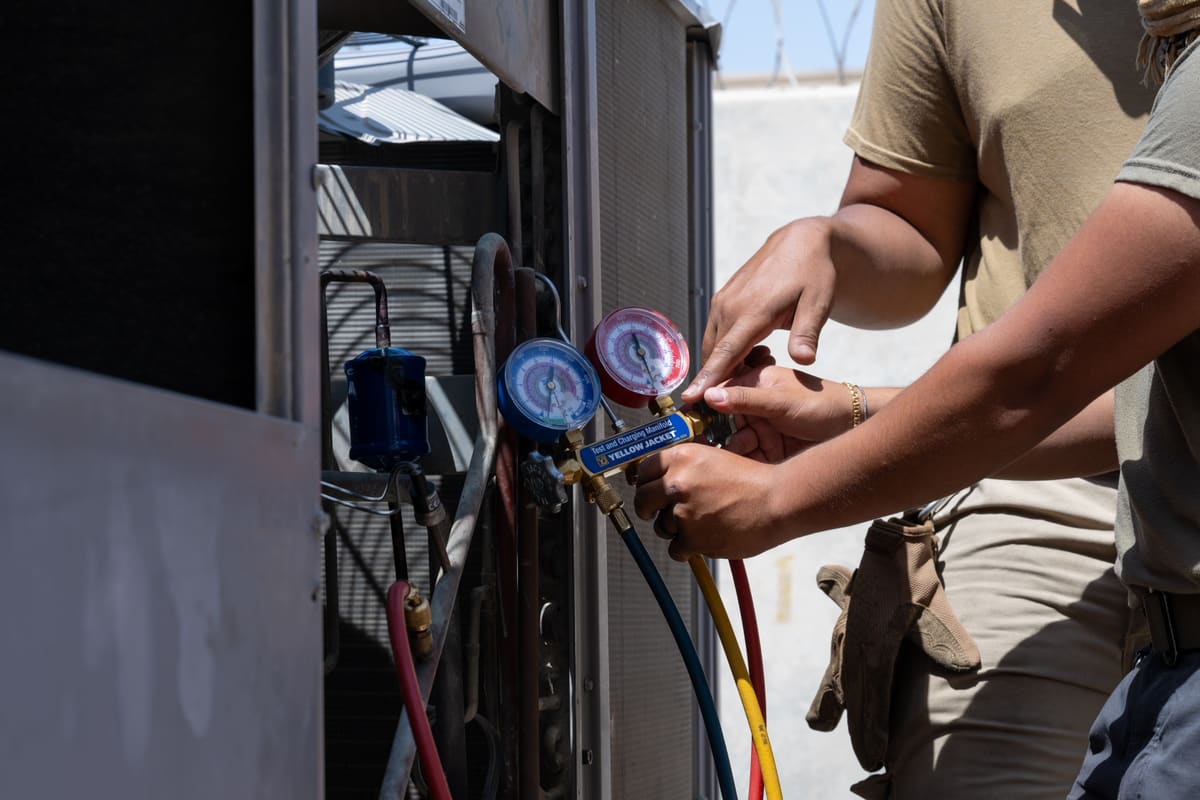
Because four different problems cause the same block of ice, diagnosis is about measurement, not guesswork. We check airflow first, filter, returns, blower speed and amp draw, since restricted airflow is the most common and cheapest cause. We measure refrigerant pressures and temperatures to see whether the charge is low, which points to a leak that needs finding and sealing rather than just topping off. We inspect the evaporator coil for the fine dust that bypasses cheap filters and insulates it, and we check the drain and pan for backups that worsen icing. Each of these leaves a different signature on the gauges, so a proper diagnosis tells us exactly which one you have and what it will take to fix, before we quote a price.
How to thaw a frozen coil the right way
Thawing seems simple, but doing it correctly protects your system and speeds the repair. First, set the thermostat to OFF to stop the cooling cycle, then set the fan to ON, which pushes room-temperature air across the iced coil and melts it far faster than just leaving everything off. Expect the process to take two to four hours for a fully frozen coil, sometimes longer on a severe block. Place towels around the air handler, because that ice turns into real water as it melts and can overwhelm a marginal drain. Do not chip at the ice with anything, since the coil fins and copper are easily damaged, and do not restart cooling until every bit of ice is gone and the coil is dry, or you will simply refreeze it. Once it is fully thawed, replace the air filter, make sure all the supply vents are open and the returns are clear, and only then try cooling again. If it cools normally and stays ice-free, a dirty filter was likely the whole story.
Preventing the freeze in the first place
Most frozen coils are preventable with the same habits that protect the rest of the system. Change the filter on schedule, every 30 to 60 days, because starved airflow is the number one cause of icing. Keep supply vents open and furniture off the returns so the blower can move enough warm air across the coil. Have the refrigerant charge checked during your annual tune-up, since a slow leak lowers coil temperature and invites ice long before you would notice weak cooling. Keep the evaporator coil clean, which a professional handles during maintenance, so dust never insulates it. And flush the condensate drain regularly so a backup never contributes to the problem. Homeowners who keep up with these basics almost never deal with a frozen system, while those who let the filter go for months tend to meet their coil as a block of ice on the hottest weekend of the year. A little routine attention goes a long way here.
If it refreezes, stop thawing and call
One freeze with a dirty filter is a lesson. A second freeze with a clean filter is a diagnosis, refrigerant, blower or coil, and every refreeze cycle risks the compressor. We diagnose same-day across Hillsborough County: (813) 743-2353.